June 24, 2009

Renovating During a Recession Makes Good Sense

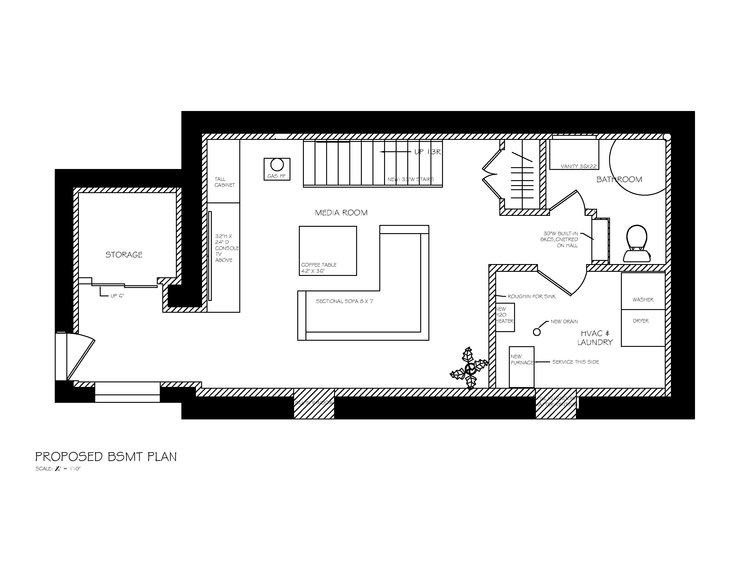
We all know the housing market isn’t what it used to be, so selling right now isn’t the ideal financial move. But what if you are tired of your space or you’ve outgrown it? What then? Think about renovating - this might include turning a clutter-filled under-utilized basement into a media room, home office/guest room, a play area for the kids, and another washroom. Or if your whole space is dated or just not functioning for you, consider a major renovation. The benefit of doing it all at once is that the space will feel more cohesive and you will save money by utilizing economies of scale (having trades do many projects at once so the overall price is lower). Spending money during a recession might sound counterintuitive but it actually makes good sense. Here’s why:

  • Trades aren’t as busy as they’ve been. Good trades are still around, more readily available and will be more willing to work with you on pricing.
  • The trades that weren’t that great in the first place are being slowly weeded out, so you’re more likely to find a skilled worker that is more reliable.
  • Most material prices are more affordable and you can often find sales – and can negotiate volume discounts (i.e. hardwood flooring).
  • You are adding value to your home, and if you plan well you will get back the money you’ve spent when you sell.
  • You are creating a space that you, your family and friends can enjoy. This is even more important now that we are going out less and spending more time at home.
  • There are government tax credits for creating more energy efficient homes (you must do an energy audit to apply for this) and renovation tax credits.

As well, by spending money we are doing our part to end the recession. Turn off the news and pick up a pencil and paper and start planning.

March 18, 2009

Healthy Treats

As the weather warms up and we wear less clothing, many of us start thinking about our waistlines. At our studio, we like to share some treats at our weekly staff meetings – everything from decadent birthday cakes to cookies and candy.

But we came across this recipe for low-fat high-fibre chocolate muffins and we found that they satisfy our cravings without any added guilt. Plus they’re really easy to make and stay moist for several days. The recipe originated with Weight Watchers years ago, and there are many variations of it out there. Here’s the one we tried – enjoy!

Chocolate Bran Muffins

Ingredients:

3 cups Kellogg’s original All Bran cereal (stick form)
2 ½ cups water
1 tbsp. baking powder
(we added 1 tsp. of vanilla as well)
1 package Betty Crocker low-fat fudge brownie mix

Preheat oven to 350 degrees and spray or line a 12-cup muffin tin. Pour water over cereal and let sit for 5 minutes or so. Add baking powder and vanilla and stir. Stir in brownie mix, then spoon into muffin tin. Bake for approximately 20 minutes.

March 05, 2009

Pinhole Camera

A pinhole camera is a very simple camera with no lens and a single very small aperture. Simply explained, it is a light-proof box with a small hole in one side. Light from a scene passes through this single point and projects an inverted image on the opposite side of the box. Cameras using small apertures and the human eye in bright light both act like a pinhole camera.

The smaller the hole, the sharper the image, but the dimmer the projected image. Optimally, the size of the aperture should be 1/100 or less of the distance between it and the screen.

A pinhole camera's shutter is usually manually operated because of the lengthy exposure times, and consists of a flap of some light-proof material to cover and uncover the pinhole. Typical exposures range from 5 seconds to hours and sometimes days.

A common use of the pinhole camera is to capture the movement of the sun over a long period of time. This type of photography is called Solargraphy.
Source: http://en.wikipedia.org/wiki/Pinhole_camera

Directions for making a mint can pinhole camera:


  1. Directions for making a tin can pinhole camera:


    • Tin can of choice

    • ISO film 100 or 200 (might want to experiment to see what you prefer)

    • Empty film cartridges (photo stores will generally give these to you)

    • Flat black spray paint

    • Very small sewing needle

    • Steel wool

    • Utility knife

    • Opaque black tape (some photo tape - I’m trying electrical tape)

    • Scissors

    • Pliers (to help create film entry and exit slits)


  2. Tape off all areas of the tin you don't want painted. (i.e interior edges of the lid). Then spray paint tin of your choice with flat black spray paint.

  3. Drill a pinhole into the top of the tin with very small sewing needle.

  4. Cut two small slits (a little wider than the film itself) at the sides of the tin with a utility knife and open these up to allow film to slide through. These should be just slightly larger than the film and near the back of the tin.

  5. Feed film through the tin (emulsion side up- light brown side).

  6. Cut the leader of unexposed film off and feed through the tin to outside. Then tape with black tape to the tail of the empty film cartridge. Attach the film cartridges to the side of the tin using the black tape.

  7. Cut a piece of cardboard and cover with the same black tape. You can be elaborate and add ‘flaps’ (extra tape that over hangs the cardboard with a little bit of the sticky side exposed so it will stick to the tin when released to keep all light out). You can also add barriers (more cardboard to surround the cardboard shutter). Again do whatever you can to ensure light will not get inside the box when you aren’t taking a photo. Attach this with tape to the tin to cover your pinhole when needed.

  8. Tape ALL the edges of film canisters with black tape. Also, make sure you tape the inside of the tin where the hinges are.

  9. Next, wind the exposed part of the leader into the empty canister. Once you do that... you're ready to shoot.

  10. Expose film for about 1-2 seconds in bright sunlight. Experiment with exposure time and keep a log so you can compare these to the images when you get them back. Then turn the receiving canister spool a full revolution (maybe a little extra to be safe) to advance to the next shot. Make sure you keep the camera still when making the exposure. Any camera shake will cause your image to blur.

  11. Once you reach the end of the film and can't wind anymore, wind the exposed film back into the original canister and process. When you take this to be processed, make sure you ask them not to cut the images. Some have automatic cutters and your spacing may not line up.


Most importantly… have fun, be creative, experiment and feel free to share your results. I’d love to see them!

February 04, 2009

Tax Credit for Home Renovations

Extra money from the Government for your renovation. Let’s get started…

The federal government has announced that part of its 2009 Economic Action Plan includes a tax credit for home renovations. Any Canadian who spends money on home renovations before February 1, 2010 will be eligible to receive up to $1,350 in tax relief thanks to the new Home Renovation Tax Credit. More details will emerge once the budget is passed – in the meantime, here is the information we have regarding the proposal on the government website:

http://pm.gc.ca/eng/media.asp?id=2403

January 07, 2009

DIY Projects: Resin Casting & Recycled Tree Art Project

Resin Casting:


Select background- e.g. art canvas, piece of hardboard
Select/determine objects to go on background- e.g. paint, charcoal sketch, pictures…
Add these items to your background in a pleasing arrangement. If you’re adhering a picture or clipping make sure the glue is compatible with the resin you’re using. Generally white artist glue is fine but make sure it is dry before starting the resin process.

Make sure you are in a well ventilated area, and use proper masks. The fumes can be strong. Some resins are better than others. Resin casting kits are available at Art Supply stores, ( I like EnviroTex Lite). Then support your project, so that it is positioned horizontally and the edges are not sitting on the ground. This is best achieved by adding a support to the underside of the canvas/board, so that it is off the ground so the resin can drip over the edges and onto a drop sheet (like those used for painting).

Once set-up, mix the resin and hardener as per instructions. These are normally in equal parts in a flat sided cup with something like a popsicle stick. Make sure it is well mixed and use immediately.

Pour the resin solution over the entire surface letting it drip over the sides (these can be sanded later).

When bubbles appear on the surface (usually about 5 or so minutes after you begin) exhale on them to make them disappear.

Let dry and viola your own beautiful art!


Recycled Tree Art Project:


Gather materials- tree, branches, board to use as the background, carpenters glue, and possibly additional fasteners (if you’re using big sections of the tree), picture hanging wire and a couple screws.

Gather tools- a mitre box and hand saw or an electric chop saw/mitre saw, a work bench/table, safety glasses.

Cut your branches in various thicknesses. There is no right or wrong- you can use one species, or different species; the branches can be uniform diameter or not. Cut lots of these ‘pucks’ so that you can dry fit them so that the arrangement is pleasing to you. I found it easier to have a variety of diameters so that I could completely fill all the spaces.

Once you’ve dry fit your pucks you can begin gluing them in place. If they are large you might want to add a screw from the back through the board to catch but not totally penetrate the puck.

Once dried you can add your picture wire and screws to hold it in place to the back. Make sure the gauge of wire is strong enough to hold the weight o the finished piece. These can get very heavy.